
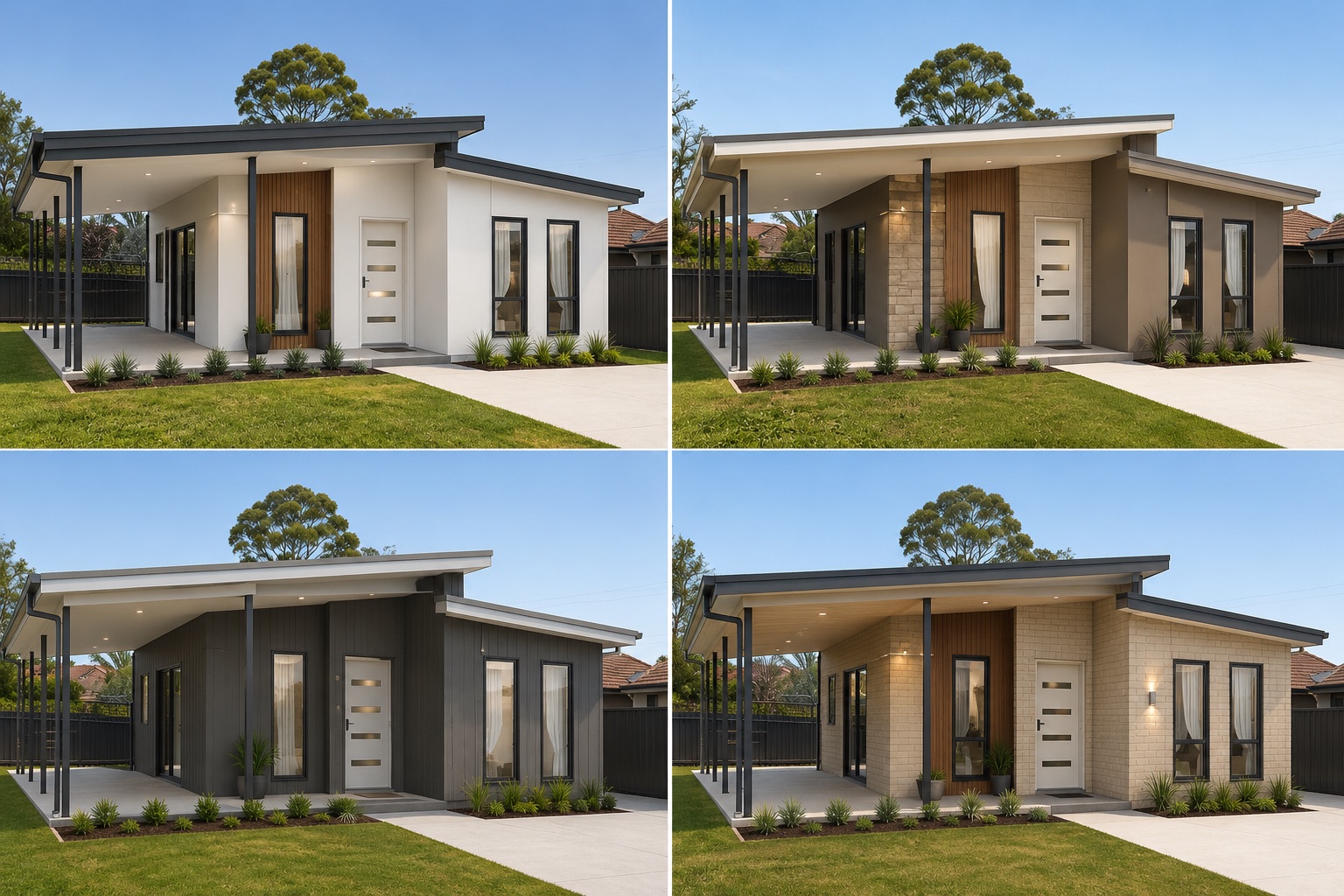
The pathway that changes everything: CDC vs DA
In NSW there are two approval pathways for a granny flat (technically called a Secondary Dwelling): Complying Development Certificate (CDC) or Development Application (DA). CDC gets you approved in as little as 10 business days if your project meets every requirement of the State Environmental Planning Policy (Housing) 2021. DA goes to council and typically takes 3–6 months.
Nearly every granny flat project we design targets the CDC pathway because the speed and certainty make everything else easier — financing, construction scheduling, tenant placement. The requirements below are what CDC eligibility comes down to.
Block size: minimum 450m²
The primary block (with your existing home) must be at least 450m² for CDC-approved granny flat eligibility. Under 450m² you're forced into DA pathway with council, where individual council policies vary widely.
Note: this is the total block area, not the area left over after your existing home footprint. Blocks between 450m² and 900m² are the most common granny flat candidates in Western Sydney.
Granny flat size: maximum 60m² internal
This is the number everyone remembers: 60 square metres of internal floor area, maximum, under CDC pathway. Attached carports, verandas and covered patios don't count toward this 60m² cap.
If you want a larger secondary dwelling (like our Terrace 65 or Anchor 75 designs), you'll need DA pathway. That's a legitimate option if the timeline works — just build 3–6 months of approval time into your project plan.
Setbacks and outdoor space
Setbacks vary by zone but typically: 3m from the rear boundary, 0.9m minimum from side boundaries (subject to fire separation requirements), and 3m from the primary dwelling if detached. Corner allotments have additional street setback requirements.
The primary dwelling must retain 24m² of usable private open space with dimensions of at least 4m x 4m. This is often the constraint that decides where a granny flat can physically sit on the block.
Ownership and tenancy rules
You cannot subdivide a block to sell a granny flat separately from the primary home. Torrens or strata titling of a secondary dwelling is not permitted — the granny flat and primary dwelling must remain under one title.
You can, however, rent out the granny flat to anyone (including non-family members) for income. Many owners use this as a long-term rental strategy — a well-designed 2-bed 60m² granny flat in Western Sydney typically rents for $450–$650/week.