
1 July 2026
Knockdown Rebuild: Save Money and Stress Less in 2026
Your complete knockdown and rebuild guide: process, approvals, design, and delivery—plus duplex options, best practices, and FAQs. Learn how to plan with confidence.
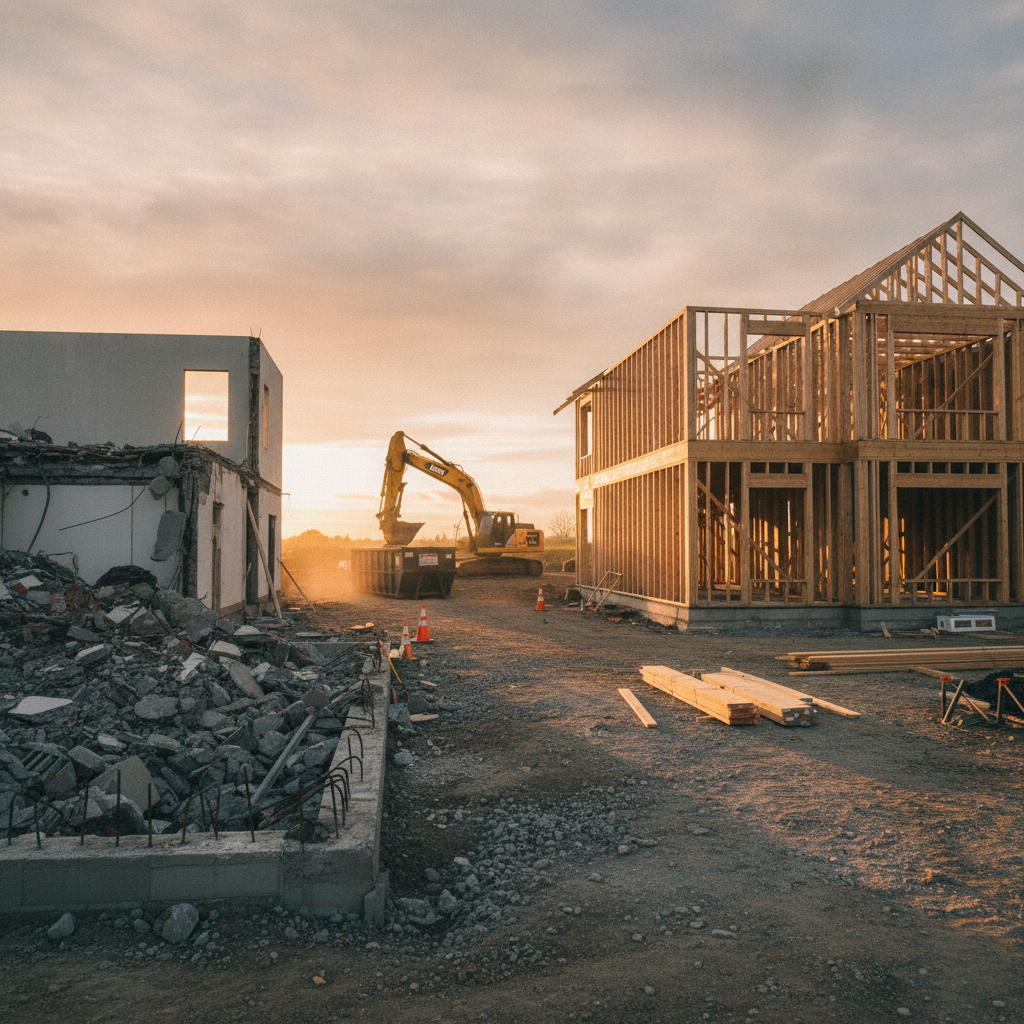
Knockdown and rebuild is the process of demolishing an existing home and constructing a new one on the same lot. It combines site-clearing, approvals, and a new build in a single, managed pathway. Homeowners choose it to unlock modern layouts, energy performance, and long-term value while staying in a familiar neighborhood.
By King Style Homes · Last updated: 2026-07-01
At a Glance
A knockdown and rebuild replaces your existing structure with a new, custom home on the same land. It streamlines demolition, design, approvals, and construction into one coordinated program, giving you a tailored floor plan, modern performance, and a move-in-ready finish—without changing your landholding or daily address.
This complete guide shows you how a coordinated, design-and-construct pathway turns ideas into a move-in-ready home. You’ll learn the steps, roles, risks to avoid, and the planning approach King Style Homes uses to keep decisions clear and craftsmanship front and center.
- Understand what a knockdown and rebuild really involves
- See how design, approvals, and construction align in one pathway
- Compare renovate vs. rebuild with a practical checklist
- Explore duplex and multi-dwelling options
- Use best practices to minimize disruption and rework
What Is a Knockdown and Rebuild?
A knockdown and rebuild is a design-and-construct approach that demolishes your current home and builds a new dwelling on the same lot. The process covers consultation, site review, concept design, approvals, demolition, new construction, and turnkey handover—delivering a modern layout and performance tailored to how you live.
In practice, this pathway keeps the land you love but removes layout or structural limits that often block good renovations. It opens the door to sunlight-optimized plans, healthier interior materials, and envelope upgrades that lower maintenance and improve comfort for years.
Core elements you should expect
- Site-aware planning: Shape the footprint, orientation, drainage, and access around real conditions.
- Collaborative design: Translate lifestyle goals into room sizes, adjacencies, and storage that actually fit daily routines.
- Approvals coordination: Prepare drawings, engineering, and certifier documentation as one package to avoid rework.
- Craft-led finish: Deliver clean lines, durable finishes, and a considered facade that ages gracefully.
- Turnkey delivery: Handover a move-in-ready home with final inspections completed and defects resolved.
King Style Homes’ defined pathway—consultation, site review, design, estimate and proposal, approvals, selections, construction updates, and handover—keeps everyone aligned. That clarity is the fastest way to control changes and protect quality on a complex, multi-stage project.
Why a Knockdown Rebuild Matters
A knockdown and rebuild unlocks modern layouts, performance, and long-term value without leaving your land. It replaces compromise-heavy patchwork with a coordinated design, giving you better daylight, storage, thermal comfort, and future-ready infrastructure—all delivered in a single, documented program.
Renovations can be great, but they’re often constrained by existing structure, plumbing stacks, and roof geometry. When the wish list outgrows the shell, starting fresh can simplify the path to a healthier, quieter, and more adaptable home.
Benefits you actually feel day to day
- Healthier interiors: Tight envelopes, fresh-air strategies, and low-VOC materials reduce drafts and odors.
- Smarter storage: Purpose-built mudrooms, pantries, and linen zones reduce clutter and increase usable space.
- Future-ready services: Wiring, plumbing, and framing can accommodate EV charging, home office needs, and aging-in-place details.
- Curb appeal: Considered facade proportions and material transitions deliver a refined, lasting first impression.
- One coordinated pathway: Fewer handoffs, clearer accountability, and construction updates that keep stress in check.
We’ve found that the biggest wins come from aligning lifestyle goals early—school-night routines, hobby spaces, work-from-home zones—then letting those choices guide room sizing, window placement, and joinery decisions.
How the Knockdown-Rebuild Process Works
The best knockdown-rebuilds follow a clear, eight-stage pathway: consultation, site review, design, estimate and proposal, approvals, selections, demolition and construction, and handover. Each stage produces decisions and documents that de-risk the next, keeping timelines and craftsmanship on track.
Think of the process as a relay. Each stage sets up the next with drawings, selections, and permissions so work can move without bottlenecks. Here’s the practical flow King Style Homes uses on custom homes, duplexes, and multi-dwellings.
- Initial consultation: Capture goals, constraints, and budget expectations; outline the journey and milestones.
- Site review: Assess access, fall, utilities, trees, drainage, and neighboring conditions to inform design options.
- Concept and design: Develop plans shaped around lifestyle (kitchen triangle, study nooks, storage, light paths).
- Estimate and proposal: Align inclusions, allowances, and provisional items; confirm scope before approvals.
- Approvals pathway: Coordinate planning, engineering, and certifier requirements to greenlight demolition and build.
- Selections: Finalize materials—flooring, tile, fixtures, cabinetry—so procurement can run in parallel with approvals.
- Demolition and construction: Clear the site, set out, pour, frame, enclose, rough-in, fix-out, and finish.
- Handover: Quality checks, compliance docs, manuals, and a move-in-ready home.
Project management, supplier coordination, logistics, and installation oversight happen throughout—this is where end-to-end accountability pays off.
Types, Methods, and Approaches
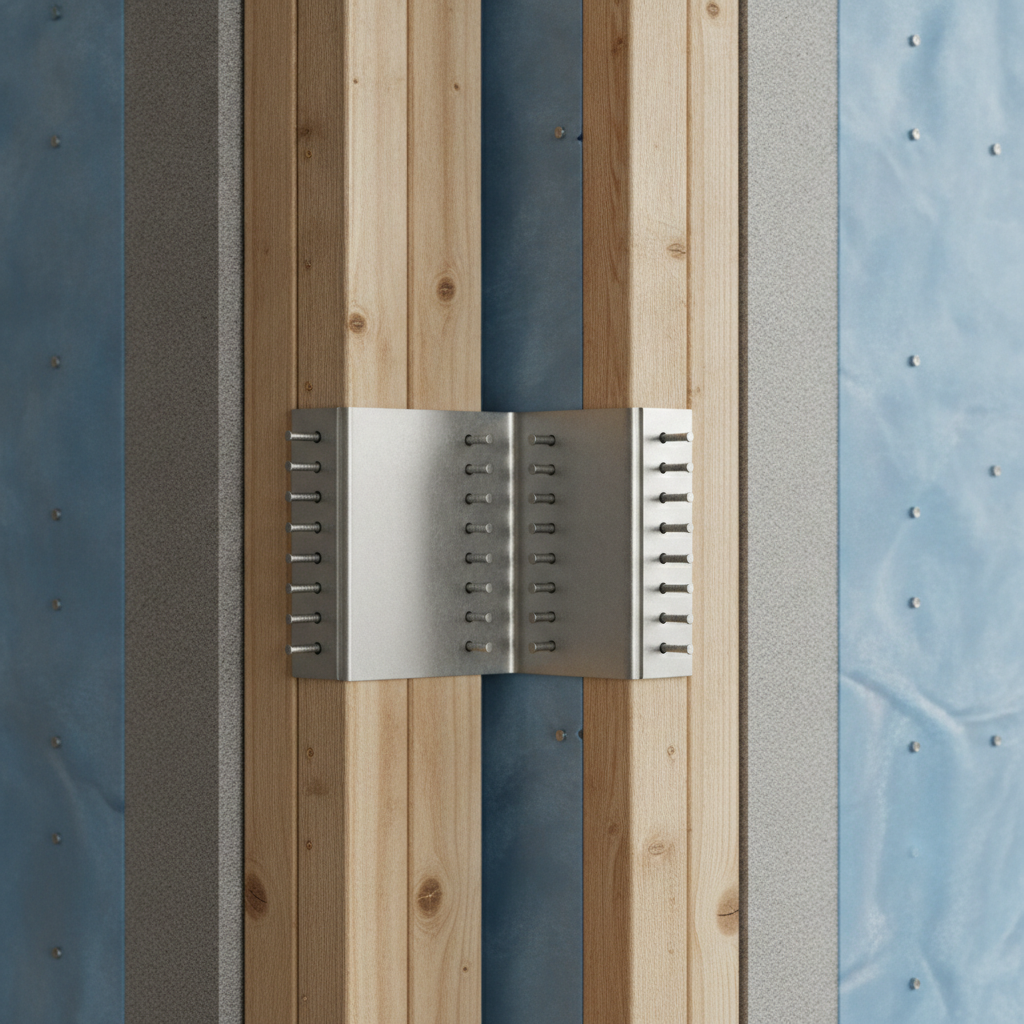
Knockdown-rebuilds span single-family homes, duplexes, and multi-dwelling projects. Delivery can be design-and-construct for clarity, with turnkey handover. Options include staged occupancy, integrated granny flats, and curated house-and-land pathways where a suitable lot and design are packaged together.
Choosing a delivery method is about risk, clarity, and the kind of home you want. King Style Homes operates as a design-and-construct builder, which means one accountable team carries design intent through to finish quality.
Project formats
- Custom single-family home: A lifestyle-led layout optimized for site orientation, privacy, and day-to-day flow.
- Duplex build: Side-by-side dwellings with shared wall efficiencies; ideal for multi-generational living or rental income.
- Multi-dwelling project: Townhome-style footprints planned for access, parking, and services from the outset.
- Granny flat integration: A secondary dwelling designed for family or independent living, planned in parallel with the main home.
Delivery approaches
- Design-and-construct: Single point of accountability from design through handover; fewer handoffs and clearer change control.
- Turnkey delivery: Final inspections, cleaning, and setup handled for a move-in-ready home at completion.
- Curated house-and-land: Where suitable, pair an appropriate lot with a matching design to streamline decisions.
For many families, integrating a duplex or granny flat into a knockdown-rebuild creates flexibility now and optionality later. That’s why planning multi-dwelling services in one go—water, power, parking—protects future choices.
Pricing, Inclusions, and Allowances (No Dollar Figures)
While specific pricing varies by scope and site, the surest way to protect value is clarity: document inclusions, allowances, and selections before construction. Aligning design intent with material choices reduces rework and helps the final home match expectations without surprise compromises.
King Style Homes uses a transparent estimate-and-proposal stage to outline what’s included, what’s provisional, and what choices remain open. This keeps procurement efficient and prevents last-minute substitutions that can affect performance or aesthetics.
What typically influences investment
- Site conditions: Access, fall, soil, trees, drainage, and utility locations.
- Home size and complexity: Floor area, levels, spans, stairs, and structural systems.
- Facade and envelope: Window-to-wall ratios, cladding systems, insulation, and weathering details.
- Interiors and joinery: Cabinetry scope, wet-area counts, and custom storage.
- Selections: Flooring, tile, fixtures, appliances, and smart-home systems.
- Program choices: Duplex, granny flat, or multi-dwelling integration.
Instead of fixating on a single number, focus on the relationship between design intent and material standards. That’s the lever that preserves long-term value.
Renovate vs. Knockdown-Rebuild
Choose renovation when targeted upgrades solve specific problems within a sound structure. Choose knockdown-rebuild when the wish list outgrows the shell—layout, height, services, or envelope limits block the lifestyle you want. A fresh build aligns performance and design from the slab up.
Here’s a quick comparison to help frame the decision without getting lost in one-off edge cases.
| Consideration | Renovation | Knockdown-Rebuild |
|---|---|---|
| Scope fit | Best for targeted upgrades | Best for full replan and performance reset |
| Structural limits | Must work around existing bones | Freedom to optimize spans, height, and layout |
| Mechanical/services | Selective upgrades within constraints | Future-ready wiring, plumbing, HVAC strategies |
| Change control | Hidden conditions can trigger rework | Documented from slab to roof for fewer surprises |
| Timeline clarity | Variable; depends on discovery | Phased schedule tied to defined milestones |
When in doubt, benchmark your goals against the home’s structural reality. If too many must-haves compete with existing limits, rebuilding brings intent and execution into alignment.
Best Practices for a Smooth Knockdown-Rebuild
The best projects protect decisions up front: lock orientation, plan storage, and confirm selections before framing. Use one accountable team for design, approvals, procurement, logistics, and construction updates. Document changes, and keep a weekly cadence for site and schedule communication.
Decision discipline
- Freeze big moves early: Kitchen locations, stair cores, and window strategies are expensive to change later.
- Right-size rooms: Tie sizes to furniture plans so clearances and flow are real, not guesswork.
- Coordinate services: Plan ducts, chases, and wet-wall stacks with cabinetry and structure.
Selections that age well
- Durable finishes: Prioritize wear layers, cleanability, and warranty support over passing trends.
- Timeless facades: Favor proportion and shadow lines over complex, maintenance-heavy gimmicks.
- Healthy materials: Consider low-VOC paints and adhesives where possible.
Process control
- One source of truth: Keep drawings, specs, and RFIs centralized.
- Weekly updates: Expect a steady rhythm of schedule notes and site photos.
- Quality gates: Treat framing, pre-drywall, and practical completion as formal checkpoints.
In our experience, a steady communication cadence is the easiest way to reduce stress. When you know what’s next and why, decisions feel lighter and move faster.
Tools and Resources You’ll Use
A successful knockdown-rebuild relies on integrated tools: site surveys and engineering, coordinated drawings for approvals, structured selections, and managed procurement and logistics. When one builder oversees the stack, friction drops and timelines stabilize.
King Style Homes provides end-to-end coordination: planning and approvals support, supplier and logistics management, installation oversight, and turnkey delivery. That single-threaded accountability links design choices to real-world scheduling and material lead times.
Common tools and artifacts
- Measured survey and engineering: Establish accurate levels, loads, and soil responses.
- Approval-ready drawings: Plans, elevations, sections, and details packaged for certifiers.
- Selections schedules: Room-by-room lists that drive accurate procurement.
- Construction updates: Regular photo and schedule updates to track progress.
- Handover documents: Manuals, warranties, and maintenance guidance.
If your project includes a granny flat, duplex, or multi-dwelling, integrate utilities and access in the same documentation set so trenching and rough-ins happen once, not twice.
Case Studies and Real-World Scenarios
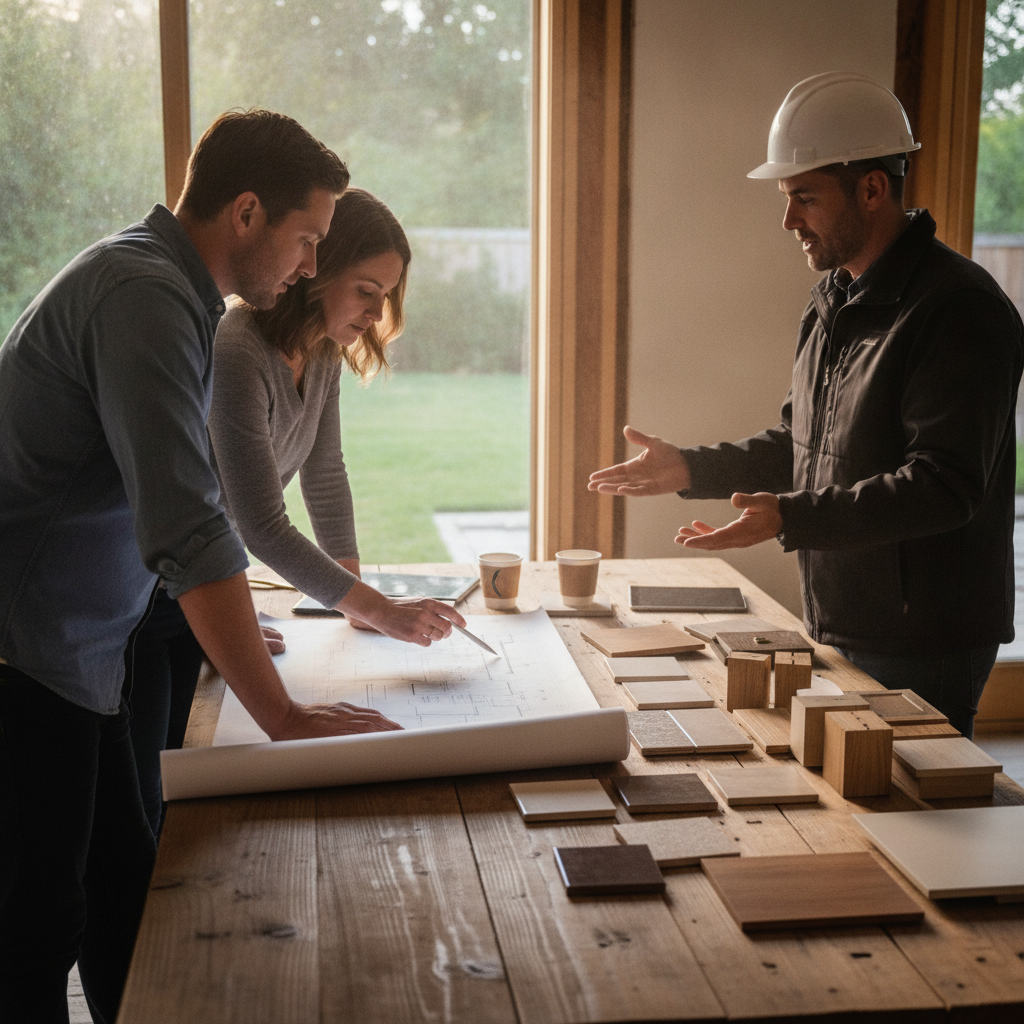
The smartest knockdown-rebuilds align lifestyle goals to site realities. Whether it’s a compact lot needing privacy or a duplex serving multi-generational living, the win comes from pairing design intent with approvals and logistics, then finishing with a consistent craft standard.
Scenario 1: Growing household, small footprint
- Challenge: Limited width and overshadowing from neighbors.
- Approach: Rebuild with an open-plan core, a lightwell stair, and storage walls; prioritize window placement for daylight.
- Outcome: Brighter interiors, defined drop zones, and a flexible study/guest room.
Scenario 2: Multi-generational living
- Challenge: Privacy and access for two households on one lot.
- Approach: Deliver a duplex with mirrored plans and acoustic strategies; service runs planned as a single system.
- Outcome: Independent living for each group with shared garden potential.
Scenario 3: Secondary dwelling for flexibility
- Challenge: Need for a self-contained zone for family or rental.
- Approach: Integrate a granny flat with its own entry and services, coordinated alongside the main build.
- Outcome: Adaptable use now, optionality for later.
Across all scenarios, the thread is the same: site-aware planning, collaborative design, and approvals coordination feeding a clean construction sequence and a crafted finish.
Common Risks and How to Avoid Them
Most setbacks trace back to fuzzy decisions or fragmented accountability. Avoid scope creep by locking key moves early, bundling approvals in one package, and aligning selections with documented inclusions. Keep one builder accountable for design intent, procurement, and finish quality.
Where projects stumble
- Late design shifts: Moving stairs, kitchens, or wet areas midstream ripples across structure and services.
- Under-specified selections: Vague finish notes invite substitutions that don’t match expectations.
- Disjointed teams: Separate designers, engineers, and builders increase handoff risk.
Simple mitigation moves
- One-team model: Design-and-construct delivery concentrates accountability.
- Selections before framing: Get cabinetry, tile, and fixture calls made early to protect lead times.
- Progress gates: Treat slab, frame, pre-drywall, and practical completion as documented checkpoints.
Documented expectations protect relationships. That’s why King Style Homes emphasizes clarity at every stage, from estimate-and-proposal to handover.
Duplex and Multi-Dwelling Knockdown-Rebuilds
A duplex or multi-dwelling knockdown-rebuild multiplies flexibility: multi-generational living, rental potential, or a live-in/lease-out balance. Plan mirrored layouts, acoustics, parking, and services from day one, and coordinate approvals and installation as a single, efficient program.
Duplex and townhome formats demand sharper planning around access and services. King Style Homes guides these choices through concept design, approvals coordination, and end-to-end project management so on-site work is efficient and the finish quality is consistent across dwellings.
- Acoustic detailing: Wall assemblies and floor transitions that keep sound where it belongs.
- Parking and access: Curb cut strategy, garage placement, and sight lines planned with neighbors in mind.
- Shared services: Consolidated runs for water, power, and data to reduce trenching and rework.
A coordinated duplex build is not simply “two houses at once.” It’s one system-level design with mirrored execution. That’s why single-threaded management matters.
House-and-Land Pathways
Where suitable, a curated house-and-land pathway pairs a lot and a design that fit together from day one. This reduces decision fatigue, aligns selections with budget expectations, and speeds approvals—while still delivering a custom, lifestyle-led result.
Some families want fewer variables at once. Packaging a lot and a proven plan can be a smart way to shorten the path to a new home. King Style Homes can guide this option while maintaining the same craft-led standards in facade, interiors, and detailing.
- Aligned from the start: Lot orientation and plan layout designed as a pair.
- Clear allowances: Inclusions and selections mapped to match design intent.
- Faster progress: Fewer unknowns and a tighter approval package.
Whether a curated pathway or a pure one-off custom, the goal is the same: a home that feels inevitable the day you move in.
Project Management and Overseas Procurement
Complex builds run on coordination. A builder who manages suppliers, logistics, installation, and procurement—local and overseas—turns selections into installed reality without friction. That’s the backbone of a smooth knockdown-rebuild and a consistent, crafted finish.
King Style Homes’ project management model keeps drawings, approvals, selections, and delivery moving in sync. When procurement is aligned with the schedule, site teams get what they need when they need it—reducing idle time and last-minute compromises.
- Supplier coordination: Clear lead times and packaging.
- Logistics management: Sequenced deliveries that match installation windows.
- Installation oversight: Fit-off quality that respects the design intent.
Selections are only as strong as the path that gets them installed. That’s why execution planning belongs beside design from day one.
Quick Summary
A knockdown and rebuild replaces your current home with a new custom dwelling on the same lot. The path works when design intent, approvals, procurement, and site execution are coordinated by one accountable builder—delivering a crafted, move-in-ready result.
- Keep lifestyle goals at the center of the design.
- Document inclusions and selections before site work.
- Bundle approvals and engineering in one package.
- Use formal quality gates at key milestones.
Frequently Asked Questions
These quick answers address common knockdown-rebuild questions about timelines, living arrangements, approvals, and how design-and-construct simplifies the journey. For project-specific guidance, speak with a builder who coordinates design, approvals, and site execution under one roof.
How long does a knockdown and rebuild take?
Timelines vary by scope and approvals. A coordinated pathway moves from consultation and design into bundled approvals, then demolition and construction, before a structured handover. Clear decisions, documented selections, and steady updates help the schedule stay on track.
Can I live on-site during construction?
During demolition and new construction, the site is an active work zone. Most families arrange alternate accommodation to keep safety and workflow smooth. Your builder will outline safe access points for inspections or milestone walkthroughs.
What approvals are required?
Approvals typically include planning, engineering, and building certifications. A design-and-construct builder coordinates drawings, calculations, and documentation as one package, reducing back-and-forth and helping avoid rework.
Is a duplex feasible on my lot?
Feasibility depends on lot size, access, services, and planning controls. Early site review and concept design will test parking, privacy, and acoustic strategies. If it pencils out, coordinating approvals and mirrored plans unlocks an efficient build program.
Conclusion and Next Steps
A knockdown and rebuild works best when one accountable builder coordinates design, approvals, procurement, logistics, and quality control. With a clear pathway and craft-led standards, you get a custom home that fits your life from day one.
- Key takeaways: lock big decisions early, document inclusions, coordinate approvals, and keep weekly updates.
- Action steps: schedule a consultation, commission a site review, and begin concept design shaped around how you live.
- Ready to plan? Explore custom homes, duplex builds, renovations and extensions, house-and-land pathways, and secondary dwellings—all delivered via a clear, transparent process.
If you’re weighing renovate versus rebuild, or exploring duplex and multi-dwelling options, we’re here to map the path and manage the details so you can focus on the home you’re building—not the paperwork behind it.
For broader context on approaches and planning, explore a helpful design-build overview here, a sample knockdown-rebuild explainer here, and a full-house renovation perspective here.